In an unprecedented move that has stunned the college basketball world, North Carolina Tar Heels player Derek Dixon has rejected a massive $6.5 million NIL (Name, Image, and Likeness) deal from Duke Blue Devils, choosing instead to remain loyal to his roots and the program that has shaped his career. Dixon’s decision to forgo a lucrative contract with one of North Carolina’s biggest rivals is being hailed as a rare and bold statement of loyalty and integrity in an era where student-athletes are often tempted by substantial financial opportunities.
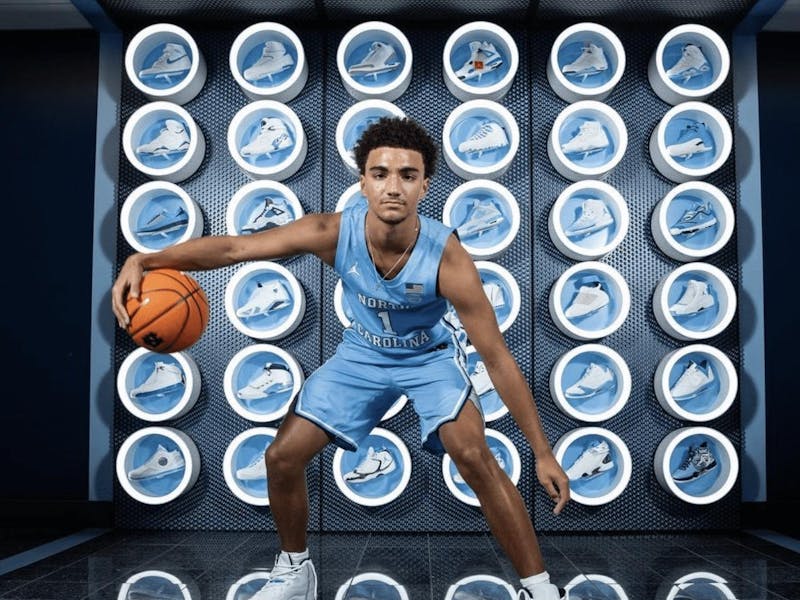
The offer from Duke, reported to be one of the most generous NIL deals ever extended to a college basketball player, would have made Dixon one of the highest-paid players in the sport. The deal, which included endorsement partnerships, social media campaigns, and exclusive appearances, was a tempting proposition for the 6’7″ forward, who has seen his stock soar following a breakout season with the Tar Heels. Yet despite the massive financial windfall, Dixon chose to prioritize his loyalty to the North Carolina program over the allure of wealth and fame.
In a statement released through his social media channels, Dixon explained that his decision was driven by a deep sense of commitment to his teammates, coaching staff, and the legacy of the Tar Heels. “When I committed to Carolina, I didn’t just commit to playing basketball—I committed to the people and the values this program represents. This is where I’ve grown, where I’ve been challenged, and where I’ve built something bigger than myself,” Dixon wrote. “Loyalty means more to me than any dollar amount, and this is where I want to finish what I started.”
Dixon’s rejection of the Duke offer has reverberated across the college basketball landscape, with fans, analysts, and former players all weighing in on the significance of his decision. Many have praised Dixon for choosing to honor the historic rivalry between North Carolina and Duke, while others see it as a sign of the growing importance of personal values over financial gain in the age of NIL.
Dixon’s loyalty also underscores a shift in the broader conversation surrounding NIL deals in college sports. As more athletes embrace the ability to profit from their personal brand, stories like Dixon’s remind us that for some players, the connection to their team and the tradition of college basketball still holds significant weight. Dixon’s choice has set a precedent for future athletes, demonstrating that loyalty and legacy can sometimes outweigh even the most lucrative financial offers.
As the season progresses, all eyes will be on Derek Dixon, who is now more than ever a symbol of both talent and integrity within college basketball.